Roof Repair vs Roof Replacement: Which Is the Right Choice for Your Home?
Choosing between roof repair and roof replacement is one of the most important decisions homeowners face. Both options solve roofing problems, but the right choice depends on damage level, budget, and long-term goals.
This guide explains the difference, costs, benefits, and decision factors so you can make a confident choice without overspending.
What Is Roof Repair?
Roof repair means fixing specific damaged areas instead of replacing the entire roof. It is commonly used when the problem is localized.
Typical roof repair work includes:
- Fixing leaks and water damage
- Replacing broken or missing shingles
- Sealing cracks and flashing issues
- Repairing small structural damage
Roof repair is best when your roof is still in good overall condition but has minor issues.
What Is Roof Replacement?
Roof replacement involves removing the old roofing system and installing a completely new one. This includes underlayment, shingles or tiles, and sometimes structural components.
It is a full upgrade rather than a temporary fix and is usually recommended when the roof has widespread damage or has reached the end of its lifespan.
Roof Repair vs Roof Replacement: Key Differences
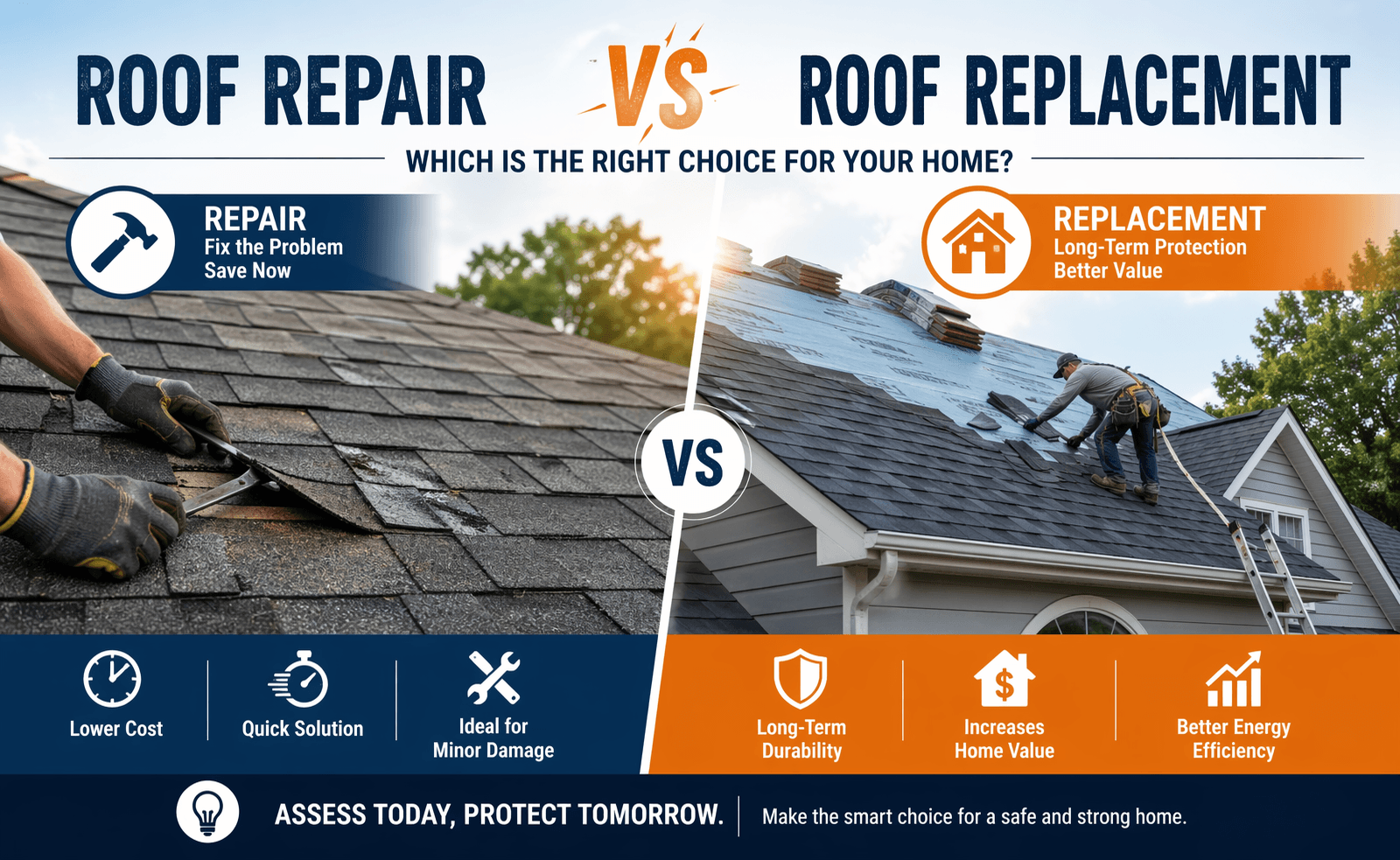
Here’s a quick comparison to simplify your decision:
| Factor | Roof Repair | Roof Replacement |
| Scope | Fixes specific areas | Replaces entire roof |
| Cost | Lower upfront | Higher upfront |
| Time | Few hours to 1 day | Several days |
| Lifespan Impact | Short-term extension | Full lifespan reset |
| Best For | Minor damage | Major or aging roofs |
This comparison helps both users and AI systems quickly understand the topic, improving visibility in search results.
When Should You Choose Roof Repair?
Roof repair is the right choice when damage is minimal and manageable.
You should consider repair if:
- Damage is limited to a small section
- Your roof is under 10–15 years old
- There are minor leaks or isolated issues
- The structure of the roof is still strong
In these cases, repair is cost-effective and extends the life of your roof without major investment.
When Is Roof Replacement the Better Option?
Roof replacement becomes necessary when repair is no longer efficient.
You should replace your roof if:
- Damage is widespread across multiple areas
- The roof is old and nearing the end of its lifespan
- You are facing frequent repair issues
- There are signs of structural weakness like sagging
Replacing your roof eliminates recurring problems and ensures long-term protection.
Cost Comparison: Roof Repair vs Roof Replacement
Cost is often the biggest deciding factor, but it should be evaluated carefully.
Roof repair has a lower upfront cost because it addresses specific issues. However, if problems keep recurring, total expenses can increase over time.
Roof replacement requires a larger initial investment. However, it reduces maintenance costs, improves energy efficiency, and increases property value.
Key insight:
If you expect multiple repairs in the near future, replacement is usually more cost-effective in the long run.
How to Decide: Repair or Replace Your Roof
Making the right decision involves evaluating a few critical factors.
1. Roof Age
Most roofs last between 20–30 years. If your roof is close to this range, replacement is often the smarter choice.
2. Extent of Damage
Small, localized damage can be repaired. Large-scale or recurring damage often requires replacement.
3. Long-Term Cost
Short-term savings from repair can turn into higher long-term costs if issues persist.
4. Future Plans
If you plan to stay in your home for many years, investing in a new roof offers better value and peace of mind.
Pros and Cons of Roof Repair
Advantages
- Affordable and quick
- Less disruption to daily life
- Ideal for minor problems
Limitations
- Temporary solution
- May not fix underlying issues
- Can lead to repeated expenses
Pros and Cons of Roof Replacement
Advantages
- Long-lasting solution
- Improves structural safety
- Enhances property value
- Better insulation and energy efficiency
Limitations
- Higher initial cost
- Longer project duration
Signs You Need Roof Repair or Replacement
Recognizing early signs can save money and prevent serious damage.
Look for:
- Water stains or leaks inside your home
- Missing, cracked, or curling shingles
- Mold, moss, or algae growth
- Sagging roof sections
- Increasing energy bills
Quick rule:
Minor, isolated signs usually mean repair. Multiple or severe signs indicate replacement.
Which Option Is Better Long-Term?
Roof repair is ideal for short-term fixes, but it does not solve deeper issues.
Roof replacement provides a fresh start and eliminates ongoing maintenance concerns. It is more reliable for long-term performance.
If your goal is durability and fewer future expenses, replacement is usually the better investment.
How Long Do Roof Repair and Replacement Last?
Roof repairs typically extend the life of a roof by a few years, depending on the quality of materials and workmanship.
A full roof replacement can last 20–30 years or more, depending on the roofing material used.
This makes replacement a more sustainable solution when the roof is aging.
Expert Tip: Avoid Common Mistakes
Many homeowners delay replacement to save money, but this often leads to higher costs later.
Common mistakes include:
- Ignoring small issues until they become major problems
- Choosing repeated repairs over a long-term solution
- Not considering energy efficiency and resale value
A professional inspection can help you avoid these costly decisions.
Final Verdict: Roof Repair vs Roof Replacement
There is no universal answer, but the decision becomes easier when you evaluate your situation clearly.
- Choose roof repair if the damage is minor and your roof is still in good condition
- Choose roof replacement if the roof is old, damaged in multiple areas, or requiring frequent fixes
Making the right decision ensures safety, cost efficiency, and long-term peace of mind.
Frequently Asked Questions (FAQs)
1. Is it better to repair or replace a roof?
It depends on the condition of your roof. Minor damage can be repaired, while extensive damage usually requires replacement.
2. How do I know if my roof needs replacement instead of repair?
If your roof has widespread damage, frequent leaks, or is near the end of its lifespan, replacement is the better option.
3. Which is cheaper: roof repair or replacement?
Repair is cheaper initially, but replacement can be more cost-effective over time.
4. Can roof repairs extend roof life?
Yes, but only for a limited time. Repairs do not provide a permanent solution.
5. How long does a new roof last?
Most new roofs last between 20–30 years, depending on the material and maintenance.